Nonprofit Digital Transformation: Using Technology to Strengthen Social Impact
Introduction
Technology shapes nearly every corner of daily life, yet access to its benefits remains unevenly distributed. Bridging the gap between modern innovation and underserved communities requires dedicated efforts from organizations that prioritize social good over commercial gain. Cotocus Foundation operates as a dedicated Technology Nonprofit Organization, channeling research, education, and digital initiatives toward meaningful societal progress. This guide explores the foundation’s core structure, its key focus areas, and the broader concepts of digital inclusion and responsible technology.
What Is Cotocus Foundation?
Cotocus Foundation functions as a mission-driven nonprofit rather than a commercial software company. Its core mission centers on making innovation, technology, and learning accessible to broader populations. By focusing on digital equity, ethical practices, and community empowerment, the organization addresses systemic gaps in technology adoption. Rather than selling commercial products, the foundation directs its resources toward public-interest research, skill-building initiatives, and collaborative problem-solving. This approach ensures that advancements in science and technology serve human needs across diverse socioeconomic groups.
Understanding the Five Pillars of Cotocus Foundation
The organization’s initiatives are structured around five distinct areas, each targeting a specific dimension of social development.
Technology for Humanity
This pillar emphasizes human-centered design, digital access, and ethical technology practices. Projects under this category aim to ensure that digital tools solve real-world human challenges rather than creating new barriers to entry.
Innovation and Research
Experimentation and evidence-based exploration form the backbone of this pillar. By studying emerging technological trends and their societal consequences, the foundation seeks to develop practical frameworks for ethical implementation.
Education and Skills
Lifelong learning and workforce readiness are critical for modern participation. This area focuses on expanding digital literacy, technical competencies, and critical thinking skills for learners of all ages.
Healthcare and Digital Wellbeing
Technology plays an essential role in health awareness and digital health education. This pillar explores how digital tools can support community wellness, improve health literacy, and promote balanced technology habits.
Community and Sustainability
Sustainable growth relies on local participation and inclusive development. This area prioritizes rural technology access, environmental responsibility, and grassroots involvement in community projects.
What Are Digital Literacy Programs?
Digital literacy goes beyond knowing how to operate a smartphone or a computer; it encompasses internet awareness, critical thinking, and online safety. Without these fundamental competencies, individuals face significant hurdles in education, employment, and civic participation.
Cotocus Foundation addresses this need through its Digital Literacy Programs, particularly initiatives like Digital Literacy for All. These programs aim to equip individuals with practical skills for everyday technology use, ensuring that no community gets left behind in an increasingly connected world.
How Digital Inclusion Programs Help Reduce the Digital Divide
The digital divide represents the gap between those who have affordable, reliable access to digital technology and those who do not. This disparity involves both physical infrastructure—such as devices and broadband connectivity—and the confidence to use them effectively.
Digital Inclusion Programs focus on expanding access, improving digital confidence, and creating equitable opportunities for underserved populations. By addressing both hardware availability and educational barriers, such initiatives help foster participation in the modern digital economy.
AI for Social Impact
Artificial intelligence offers powerful tools for addressing complex societal challenges, from healthcare delivery to environmental monitoring. Applying these technologies responsibly requires aligning technical capabilities with community needs rather than commercial incentives.
Cotocus Foundation’s AI for Social Impact initiatives, including collaborative fellowships, bring together technologists, researchers, and social entrepreneurs. These groups explore how machine learning models can assist in solving real-world problems while maintaining a strict focus on human welfare and ethical standards.
Why Responsible AI Research Matters
As automated systems become more widespread, questions surrounding fairness, transparency, accountability, and bias grow increasingly urgent. Without proper oversight, algorithms can reinforce existing social inequalities or compromise individual privacy.
Responsible AI Research focuses on establishing ethical frameworks, ensuring human oversight, and promoting community participation in technology design. Cotocus Foundation’s research topics, such as responsible frameworks for social impact, aim to guide developers and organizations toward ethical and transparent deployment.
Technology Education Programs for Lifelong Learning
Continuous learning is essential in a world shaped by rapid technological shifts. Education programs must go beyond rote technical training to foster problem-solving, critical analysis, and adaptability.
Through structured Technology Education Programs, learners gain mentorship, career preparation, and technical understanding. These programs help bridge the gap between traditional education systems and the demands of modern workforce development.
Youth Innovation Programs and Young Problem Solvers
Empowering the next generation to tackle local and global challenges fosters creativity and long-term community resilience. Young minds often bring fresh perspectives to complex issues when provided with the right mentorship and resources.
Cotocus Foundation’s Youth Innovation Programs, such as the Youth Innovation Challenge, encourage young problem-solvers to design technology-based solutions for community needs, cultivating collaboration and practical innovation skills from an early age.
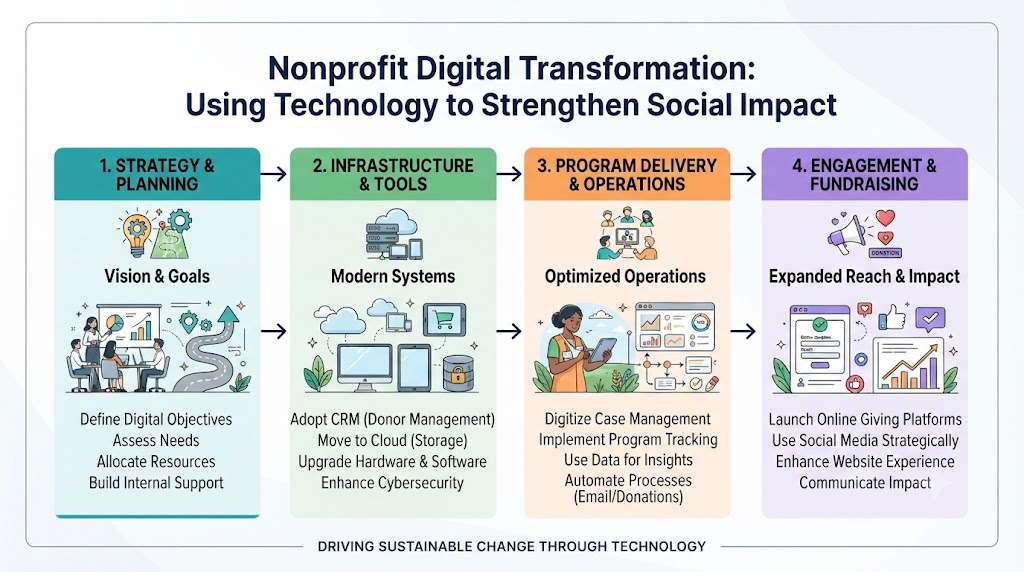
Nonprofit Digital Transformation
Mission-driven organizations often struggle to adopt modern digital tools due to limited resources, lack of technical training, or budget constraints. Digital transformation for nonprofits involves updating internal processes, managing data responsibly, and expanding digital outreach.
Through specialized initiatives and labs, organizations can approach Nonprofit Digital Transformation systematically, improving their operational capacity and enhancing the reach of their community programs.
Innovation Labs and Technology Research
Innovation labs serve as collaborative spaces where researchers, developers, and community members explore emerging concepts and test practical applications.
AI Innovation Lab
This lab focuses on experimenting with artificial intelligence models specifically tailored for community development, education support, and social welfare applications.
Future Technology Lab
Dedicated to horizon scanning, this space examines upcoming technological trends to anticipate their long-term societal implications and potential benefits.
Digital Transformation Lab
This lab assists mission-driven organizations in adopting digital tools securely, efficiently, and sustainably to improve their operational reach.
Technology and Healthcare for Social Impact
Access to reliable health information and digital health tools can significantly improve community wellbeing. Healthcare technology initiatives focus on expanding health awareness, supporting telehealth education, and empowering patients in underserved regions to make informed decisions about their care.
Community and Sustainability Initiatives
Sustainable technology development requires active collaboration with local populations. By focusing on rural access, environmental responsibility, and inclusive growth, community initiatives ensure that technological solutions respect local contexts and long-environmental goals.
Corporate Social Impact Partnerships
Collaboration between nonprofits, academic institutions, and corporate entities can accelerate the deployment of effective social programs. Organizations looking to contribute can engage through expertise sharing, research collaboration, mentorship, and resource support. These Corporate Social Impact Partnerships help scale educational initiatives and community projects while aligning business social responsibility goals with grassroots needs.
Technology Volunteer Opportunities
Individuals looking to contribute their skills can find meaningful ways to participate through structured programs. Technology Volunteer Opportunities allow professionals and students to engage in mentoring, research support, content creation, and community outreach. Programs like global volunteer networks and campus ambassador initiatives provide structured avenues for contributing to social-impact projects.
| Cotocus Foundation Focus Area | Main Purpose | Related Social Impact |
| Technology for Humanity | Human-centered design and ethical access | Ensuring technology serves human needs equitably |
| Innovation & Research | Evidence-based exploration and experimentation | Developing frameworks for ethical implementation |
| Education & Skills | Lifelong learning and workforce readiness | Expanding digital literacy and technical competence |
| Healthcare & Digital Wellbeing | Health awareness and digital health education | Promoting balanced habits and wellness education |
| Community & Sustainability | Grassroots participation and inclusive growth | Supporting rural access and environmental responsibility |
Who Can Benefit From Cotocus Foundation’s Work?
Students and Young Learners
Gain foundational digital skills, participate in innovation challenges, and develop critical thinking capabilities for future workforce readiness.
Technology Professionals
Contribute technical expertise through volunteer networks, collaborate on social-impact projects, and explore ethical technology frameworks.
Researchers and Academics
Engage in collaborative studies regarding responsible technology, digital inclusion, and the societal impacts of automation.
Nonprofit and Community Organizations
Access resources for digital transformation, improve operational capacity, and expand community outreach efforts.
Social Entrepreneurs and Innovators
Connect with like-minded peers, test community-focused innovations, and participate in fellowship programs.
Organizations Interested in Technology for Social Impact
Build strategic partnerships to support educational programs, digital literacy initiatives, and sustainable community development.
| Technology for Social Impact Area | Key Challenge | Possible Approach |
| Digital literacy | Lack of basic technical confidence | Structured community workshops and foundational training |
| Digital inclusion | Unequal access to devices and connectivity | Infrastructure support and accessible program design |
| Responsible AI | Algorithmic bias and lack of transparency | Ethical frameworks and community-led oversight |
| Technology education | Mismatch between skills and modern demands | Mentorship programs and continuous workforce training |
| Youth innovation | Limited outlets for creative problem-solving | Innovation challenges and guided project incubators |
| Healthcare technology | Disparities in health information access | Digital health education and awareness campaigns |
| Nonprofit digital transformation | Resource constraints and outdated processes | Capacity-building labs and guided digital adoption |
How to Plan a Technology-for-Social-Impact Initiative
- Identify the Community Need: Observe and listen to the specific challenges faced by the target population before proposing any technological intervention.
- Understand the People Affected: Involve community members directly in discussions to ensure cultural relevance and practical applicability.
- Define the Social-Impact Goal: Establish clear, measurable objectives focused on human benefit rather than mere technology adoption.
- Select the Appropriate Technology: Choose tools that are sustainable, affordable, and manageable for the community over the long term.
- Consider Ethics and Inclusion: Evaluate potential biases, privacy concerns, and accessibility barriers to ensure equitable participation.
- Build Community Participation: Encourage local leadership and active involvement throughout the design and implementation phases.
- Measure Meaningful Outcomes: Track qualitative feedback, skill development, and actual participation rates rather than relying on vanity metrics.
- Review, Improve, and Sustain the Initiative: Continuously assess program performance and adapt strategies to ensure long-term viability and positive community impact.
Common Challenges in Technology-for-Social-Impact Work
Designing and deploying technology programs for social good involves navigating several recurring obstacles. Infrastructure barriers, such as unreliable electricity or limited internet connectivity, frequently hinder digital inclusion efforts. Additionally, a lack of foundational digital skills can create hesitation among participants, making training programs just as important as device distribution. Privacy and data protection present another critical concern, particularly when handling information for vulnerable populations. Furthermore, ensuring the financial and operational sustainability of nonprofit initiatives requires ongoing collaboration, careful resource allocation, and active community engagement.
Best Practices for Social-Impact Technology
- Start with community needs: Always prioritize grassroots feedback over preconceived technological solutions.
- Design for accessibility: Ensure tools and educational materials accommodate diverse physical, cognitive, and linguistic needs.
- Keep ethics central: Maintain strict standards regarding data privacy, algorithmic fairness, and transparency.
- Use clear data practices: Be transparent about how information is collected, stored, and utilized within programs.
- Involve local communities: Empower local leaders to guide project implementation and long-term maintenance.
- Build digital skills alongside access: Combine hardware distribution with comprehensive literacy and training programs.
- Measure meaningful outcomes: Focus on long-term capacity building and qualitative feedback rather than short-term numbers.
- Encourage collaboration: Foster partnerships across sectors to share knowledge, resources, and expertise.
- Review and improve programs: Regularly evaluate initiative performance and adapt to changing community requirements.
- Focus on long-term sustainability: Design projects to outlast initial funding cycles through local ownership and capacity building.
Measuring Social Impact in Nonprofit Programs
Evaluating the success of technology-focused nonprofit programs requires a balanced mix of quantitative metrics and qualitative insights. Rather than relying on speculative figures, organizations track participation rates, learning outcomes, skill development milestones, and community adoption levels. Transparency in reporting helps build trust among partners, volunteers, and the public. As new programs launch and mature, publishing verified findings ensures accountability and guides future improvements in the social-impact sector.
Frequently Asked Questions
What is Cotocus Foundation?
Cotocus Foundation is an independent nonprofit organization focused on utilizing technology, research, education, and digital inclusion initiatives to create positive social impact.
What does a technology nonprofit organization do?
A technology nonprofit focuses on applying innovation, digital tools, and research toward public-interest goals rather than pursuing commercial profit.
What are digital literacy programs?
These programs teach foundational computer, internet, and digital safety skills, enabling individuals to participate safely and effectively in a digital society.
How can AI support social impact?
Artificial intelligence can assist in optimizing healthcare delivery, supporting educational initiatives, and analyzing environmental data when implemented with ethical oversight.
Why is responsible AI research important?
It helps identify and mitigate algorithmic bias, protects individual privacy, and ensures that automated systems remain transparent and accountable to human users.
What does digital inclusion mean?
Digital inclusion refers to ensuring all individuals and communities have equitable access to affordable information and communication technologies, along with the skills to use them.
What types of technology education programs can support communities?
Programs that offer digital literacy training, technical mentorship, workforce preparation, and continuous learning opportunities help communities adapt to technological shifts.
How can young people participate in innovation programs?
Young individuals can join youth innovation challenges, mentorship initiatives, and community problem-solving projects designed to foster creativity and practical skills.
What is nonprofit digital transformation?
It is the responsible adoption of digital tools, data management practices, and modern workflows by mission-driven organizations to enhance their operational efficiency and reach.
How can professionals explore technology volunteer opportunities?
Professionals can engage through global volunteer networks, mentorship programs, research support, and community outreach initiatives offered by mission-driven foundations.
Conclusion
Advancing digital equity and responsible innovation requires a concerted, collaborative effort across education, research, and community development. Organizations like Cotocus Foundation demonstrate how structured technology programs can support human needs, bridge the digital divide, and foster inclusive growth. By prioritizing accessibility, ethical AI research, lifelong learning, and active community participation, society can ensure that technological advancements empower everyone equally. Embracing these principles helps build a more connected, transparent, and resilient future for communities worldwide.
Leave a Reply