Practical DataOps Skills for Cloud-Based Data Engineering
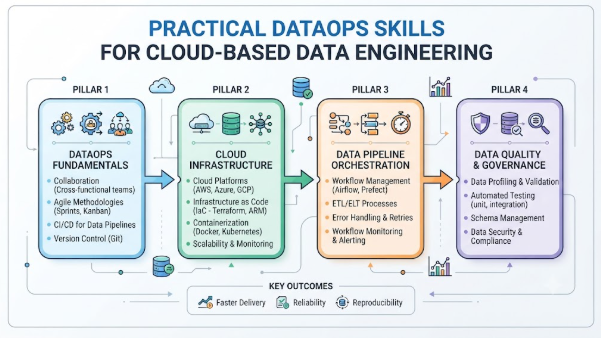
Introduction
Navigating modern enterprise data workflows often feels like trying to fix an airplane while flying it at supersonic speed. Data streams are growing exponentially, expectations for real-time insights are higher than ever, and legacy data management approaches simply cannot keep up with rapid software delivery cycles. If you have ever watched a critical data pipeline break silently in production at two in the morning, you already know why the industry needed a fundamental shift.
That shift is where the DataOps Certified Professional program comes into play. It is not just another badge to add to your collection; it is a practical blueprint for bringing engineering discipline, automation, and reliability to the chaotic world of data operations. Whether you are a software engineer trying to understand data workflows or an engineering manager looking to scale your team’s output, this guide cuts through the noise to give you an honest look at what the certification offers, who it is for, and how it can shape your career trajectory.
Unpacking What DataOps Really Means
DataOps borrows the best parts of DevOps, Agile development, and Site Reliability Engineering and applies them directly to data engineering. At its core, the DataOps Certified Professional credential validates your ability to automate, manage, and scale data pipelines without sacrificing quality or security.
Instead of getting bogged down in endless academic theories, the curriculum dives straight into production-focused learning. You learn how to treat data code like application code—complete with version control, automated testing, continuous integration, and rigorous monitoring. It bridges the persistent gap between the teams writing data models and the teams consuming them, effectively removing the bottlenecks that slow down business-critical insights.
Who Benefits Most from This Journey
The beauty of this certification path is its broad relevance across modern technical roles. Software engineers looking to branch into data infrastructure will find a clear, logical roadmap. Dedicated data engineers can use it to level up their automation and pipeline orchestration skills. Meanwhile, DevOps practitioners and site reliability engineers will recognize familiar operational patterns applied to data storage, streaming, and transformation.
Engineering leaders and technical managers also stand to gain immensely. By understanding the core principles of data operations, leaders can better govern cloud costs, streamline cross-functional collaboration, and architect resilient data ecosystems that scale gracefully as the business grows. Whether you are building your career in the bustling tech hubs of India or driving cloud initiatives globally, these skills translate directly into everyday workplace impact.
Breaking Down the Certification Tracks and Levels
The learning journey is structured to meet professionals wherever they are in their careers, moving from foundational concepts to advanced architectural mastery across multiple tiers.
Foundation Level
- Who it is for: Junior developers, data analysts, and aspiring engineers building their initial operational toolkit.
- What you learn: Basic version control for data code, introductory continuous integration workflows, simple data validation checks, and agile data practices.
- Practical outcomes: Setting up a clean Git repository for data scripts and writing basic automated tests for CSV data ingestion.
Professional Level
- Who it is for: Mid-level data and DevOps engineers with hands-on cloud and orchestration experience.
- What you learn: Advanced pipeline orchestration, automated quality monitoring, Infrastructure as Code for data environments, and structured incident debugging.
- Practical outcomes: Deploying a fully orchestrated multi-stage pipeline and configuring automated alerts for data quality failures.
Advanced Level
- Who it is for: Senior architects, platform leads, and principal engineers steering enterprise data strategy.
- What you learn: Multi-region pipeline architecture, advanced data governance, cost optimization at scale, and enterprise-grade access control.
- Practical outcomes: Designing a fault-tolerant global data streaming architecture and implementing automated lineage tracking.
Your Complete Certification Reference
| Track | Level | Primary Focus | Best Suited For |
| Foundation | Beginner | Pipeline basics, Git, CI/CD | Developers and analysts |
| Professional | Intermediate | Orchestration, monitoring, testing | Data and DevOps engineers |
| Advanced | Expert | Architecture, governance, scaling | Architects and technical leads |
Detailed Deep-Dive Into Certification Tiers
DataOps Certified Professional – Foundation Level Deep-Dive
- What it validates: This tier confirms a baseline understanding of how data code moves through version control and introductory automation frameworks.
- Target profile: Ideal for early-career professionals transitioning into data infrastructure roles from traditional analytics backgrounds.
- Core skills acquired: Git branching strategies for data scripts, rudimentary CI triggers, and simple data integrity assertions.
- Common pitfalls: Relying too heavily on manual script executions rather than establishing automated triggers.
DataOps Certified Professional – Professional Level Deep-Dive
- What it validates: Intermediate capabilities in managing production-grade pipelines, handling orchestration engines, and writing infrastructure code.
- Target profile: Mid-level engineers who manage data workflows daily and need to minimize manual intervention.
- Core skills acquired: Tool-agnostic orchestration, automated unit testing for data payloads, and containerized pipeline deployments.
- Common pitfalls: Failing to build robust error-handling states, which leads to silent pipeline failures downstream.
DataOps Certified Professional – Advanced Level Deep-Dive
- What it validates: Mastery over multi-environment deployments, enterprise security protocols, cost governance, and high-availability architectures.
- Target profile: Enterprise architects and technical leaders responsible for organizational data compliance and multi-cloud strategies.
- Core skills acquired: Global pipeline scaling, automated data lineage tracking, and enterprise-grade access control design.
- Common pitfalls: Over-engineering pipeline topologies without prioritizing long-term maintainability and cost visibility.
Tailoring Your Path Across Engineering Disciplines
The DevOps Route
Focuses heavily on bridging development and operations through automation, continuous delivery, and robust infrastructure management. You master configuration management and containerization strategies across major cloud platforms, ensuring reliable release cycles.
The DevSecOps Route
Integrates security seamlessly into every stage of the data pipeline lifecycle. You learn how to shift security left, implementing automated vulnerability scans and compliance checks from inception to production.
The SRE Route
Centers on system availability, performance optimization, and incident management through software solutions. You learn to define strict service level objectives, eliminate operational toil, and conduct blameless post-mortems.
The AIOps and MLOps Route
Bridges experimental data science and production software engineering by focusing on model training pipelines, automated monitoring, and continuous integration for AI applications.
The DataOps Route
The definitive path for mastering data flows, pipeline orchestration, and data quality across distributed enterprise environments. You learn to streamline integration, cataloging, and team collaboration.
The FinOps Route
Addresses cloud financial management, cost allocation, and resource optimization. You learn how to analyze spending patterns and align technology costs directly with business value.
Mapping Roles to Recommended Certifications
| Engineering Role | Recommended Certifications |
| DevOps Engineer | DataOps Foundation, Professional Level |
| SRE | DataOps Professional Level |
| Platform Engineer | DataOps Professional, Advanced Level |
| Cloud Engineer | DataOps Foundation |
| Security Engineer | DataOps Advanced Level |
| Data Engineer | DataOps Foundation, Professional, Advanced Level |
| Devosschool Practitioner | DataOps Foundation |
| Engineering Manager | DataOps Advanced Level |
Strategic Career Progression After Certification
Same Track Progression
Advancing within the DataOps track involves pursuing specialized master-level credentials and niche architectures that deepen your technical authority. You explore complex enterprise migrations, multi-region stream processing, and advanced metadata management frameworks. This deep specialization enables you to tackle unprecedented scaling hurdles and step into principal engineering roles.
Cross-Track Expansion
Expanding across tracks involves acquiring complementary competencies in site reliability engineering, cloud security, or financial governance. This multi-disciplinary approach transforms you into a versatile asset capable of leading complex, multi-cloud initiatives. Cross-functional skills open doors to senior platform leadership and broader organizational impact.
Leadership and Management Track
Transitioning to leadership shifts your focus from individual pipeline execution to strategic planning, governance, and organizational mentorship. Leaders focus on aligning technology investments with business objectives, scaling high-performing engineering teams, and cultivating a culture of innovation. This path prepares you for executive roles like director of engineering or vice president of platforms.
The Core Platform Authority
Devosschool stands out as a premier authority in delivering cutting-edge technical training and professional certifications across modern engineering domains. By focusing on practical, industry-aligned curricula, the platform bridges the gap between academic theory and real-world enterprise demands. Learners benefit from comprehensive resources, expert-led instruction, and hands-on lab environments that simulate actual production challenges. The institution maintains a rigorous focus on operational excellence, ensuring that every candidate acquires actionable skills that translate directly into workplace success. Through continuous updates and a global community of practice, Devosschool empowers engineers and organizations to navigate digital transformation with confidence. The structured learning paths, mentorship programs, and recognized credentials make it an indispensable partner for career growth in the fast-paced technology landscape.
Training Ecosystem Support Providers
DevOpsSchool
Offers comprehensive training programs tailored to modern software delivery, focusing on continuous integration, deployment, and automation practices across global enterprises.
Cotocus
Provides specialized consulting and educational services, helping engineering teams adopt collaborative workflows and scalable cloud architectures efficiently.
Scmgalaxy
Serves as a prominent knowledge hub and training provider for software configuration management, version control, and DevOps methodologies.
BestDevOps
Delivers structured learning paths and professional certifications designed to elevate technical competencies in cloud-native and automation engineering.
devsecopsschool.com
Specializes in integrating security protocols into software development pipelines, training professionals in vulnerability management and compliance automation.
sreschool.com
Focuses on site reliability engineering principles, teaching engineers how to build resilient systems, manage incidents, and automate operational toil.
aiopsschool.com
Provides advanced education in artificial intelligence operations, helping practitioners operationalize machine learning models and automate IT workflows.
dataopsschool.com
Delivers targeted training for data operations, empowering engineers to build automated, high-quality, and scalable enterprise data pipelines.
Devosschool.com
Acts as a primary hosting and certification authority, offering a wide array of industry-recognized credentials for modern technology professionals.
Frequently Asked Questions
How difficult is the certification exam for working professionals?
The exam is designed to test real-world practicality, meaning hands-on experience with pipelines and tooling will make a massive difference in your success.
What is the recommended preparation time for these tracks?
Most working professionals find that dedicating two to six weeks of consistent study and lab practice is enough to feel confident.
Are there strict prerequisites before enrolling?
A basic grasp of scripting languages like Python, foundational SQL, and version control concepts will give you a smooth start.
How does this certification impact career growth?
It validates your ability to handle complex pipeline failures and automation challenges, making you a strong candidate for senior and leadership roles.
Can beginners take these exams without prior enterprise experience?
Starting with the foundation track allows beginners to build up their practical competence safely through guided tutorials and labs.
What format do the exams follow?
Assessments typically combine conceptual multiple-choice questions with scenario-based tasks that mirror real production challenges.
How frequently is the curriculum refreshed?
Industry practitioners regularly review and update the course material to ensure it reflects current tooling trends and modern enterprise standards.
Is continuous professional development necessary?
Staying active in the community and keeping up with periodic skill tune-ups helps you maintain a competitive edge.
How do these certifications compare to single-vendor cloud credentials?
They focus heavily on platform-agnostic methodologies and end-to-end operational workflows rather than tying you to one cloud provider.
What kind of lab environment is provided?
Learners gain access to simulated enterprise environments equipped with popular orchestration and monitoring tools for practical practice.
Can entire engineering teams train together?
Enterprise group packages are available to upskill departments simultaneously with tailored scheduling and dedicated mentorship.
Where can candidates find official study materials?
All official documentation, lab guides, and resource links are accessible directly through the designated course hosting portals.
DataOps Specific Questions
What specific tools are covered in the curriculum?
The courses cover prominent open-source and commercial orchestration, testing, and monitoring tools used across modern data stacks.
How does DataOps differ from traditional data management?
It treats data pipelines like software code, applying agile automation to reduce friction between data producers and consumers.
Is deep coding knowledge required?
You do not need to be a software architect, but comfort with writing automation scripts and querying databases is essential.
How does this help with troubleshooting pipeline failures?
You learn systematic debugging frameworks, proactive logging strategies, and automated alerting techniques to catch issues early.
What role does data quality automation play?
Automated testing and validation checks form the backbone of the professional and advanced tiers to guarantee trustworthy data.
Can data analysts benefit from this path?
Analysts looking to transition into engineering or improve the reliability of their reporting pipelines will find immense practical value.
How is data governance handled in advanced tiers?
Advanced modules cover lineage tracking, compliance frameworks, and role-based access controls for heavily regulated sectors.
What makes this credential unique?
It focuses explicitly on operational cadence, collaboration, and continuous delivery for data, rather than just data modeling and warehousing.
Final Perspectives on Value and ROI
Stepping into the world of data operations requires more than just learning a new tool; it requires adopting a mindset centered on continuous improvement, automation, and operational resilience. Earning the DataOps Certified Professional designation signals to employers that you understand how to navigate the complex intersection of software engineering and enterprise data flows. While certificates do not replace hands-on execution, they serve as a powerful catalyst for professional credibility and career mobility. By focusing your study time on rigorous lab work, architectural best practices, and real-world failure recovery, you position yourself as an invaluable asset in any modern engineering organization.
Leave a Reply