Mastering Industrial Robotics and Autonomous Mobile Robots with RobotOps
Introduction
Taking care of working robots is not an easy job. When mechanical helpers roll through busy warehouses or factories, they need constant care. This need created a helpful practice known as RobotOps. Think of it as digital caretaking for mechanical workers. Just as computer networks need IT experts, automated systems need smart tools to stay healthy. This article looks at how modern engineering methods help teams watch, fix, and update robotic fleets safely. By learning about these ideas, you will see how technology keeps smart machines working without sudden stops.
What RobotOps Means and Why It Matters
RobotOps brings software engineering and automation together to manage physical machines. When a company uses automated systems, it faces brand new challenges. Machines can lose connection, batteries can die, or software can crash. Without proper oversight, fixing these issues takes too much time. Good operational habits help teams spot problems before they turn into major breakdowns. This field makes sure that mechanical helpers stay safe, productive, and easy to control from far away.
Managing Robot Fleets at Scale
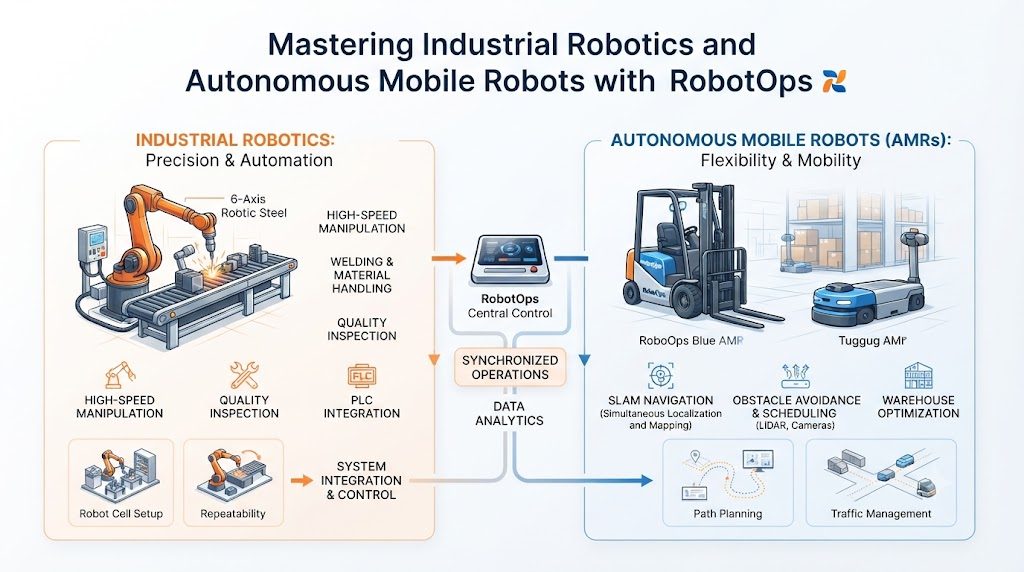
Running one machine is simple, but managing dozens or hundreds is hard. Robot Fleet Management is the process of keeping track of many units at the same time. Operators need to know where each machine is and what it is doing. Fleet managers track battery levels, task progress, and travel routes. If a unit gets stuck, operators can send help right away. Proper fleet tools stop traffic jams in busy work areas and keep every machine busy.
The Role of Industrial Robotics in Factories
Factories rely heavily on heavy-duty machines to build products fast. Industrial Robotics includes robotic arms, automated welding tools, and heavy lifting units. These machines repeat exact steps thousands of times without getting tired. However, they still need software updates and careful safety checks. Keeping these factory helpers running protects workers and avoids costly pauses in production.
Why Robotics Software Is the Brain of Every Machine
Hardware is only half of the puzzle. Robotics Software acts as the brain that tells the physical parts how to move and react. This software includes operating systems, navigation programs, and safety rules. Developers update this code regularly to fix bugs and add new skills. Good software makes machines smarter and safer around human workers.
| Software Layer | Main Job | Simple Explanation |
| Operating System | Core Control | Manages basic computer tasks and hardware links. |
| Navigation Tool | Path Finding | Helps the machine map rooms and avoid walls. |
| Fleet Manager | Coordination | Tells multiple units how to work together. |
Testing Safely with Robot Simulation
Before putting new code onto a real machine, developers test it in a virtual world. Robot Simulation uses computers to create digital twins of physical workspaces. Engineers can test new navigation code or heavy tasks without risking physical damage. If a virtual machine crashes into a wall, nobody gets hurt, and the code can be fixed instantly.
Autonomous Mobile Robots in Daily Work
Autonomous Mobile Robots are smart machines that move around without a human driver. You can find them rolling through large warehouses carrying boxes or cleaning floors. They use sensors to see obstacles and find their own paths. Managing these moving units requires constant tracking to ensure they reach their destinations safely.
Boosting Efficiency Through Robotics Automation
Robotics Automation is all about making work processes faster and safer. By letting machines handle heavy lifting and repetitive tasks, human workers can focus on creative jobs. Automation reduces mistakes and speeds up delivery times in shipping centers. Proper operational software ensures these automated workflows run day and night without interruption.
Inside a Robotics Operations Center
A Robotics Operations Center is a central control room where engineers watch over active machines. Think of it like an air traffic control tower, but for ground robots.
- Telemetry Tracking: Watching live data streams about speed and health.
- Incident Handling: Fixing software errors or physical jams quickly.
- Performance Review: Looking at past data to find ways to work better.
- Remote Override: Taking manual control if an automated unit gets stuck.
The Power of ROS 2 in Modern Development
Many modern developers build their systems using ROS 2, which stands for Robot Operating System version 2. It is a flexible framework full of ready-made tools. ROS 2 helps different parts of a machine talk to each other smoothly. It also makes it easy for developers to share code, connect sensors, and build safe navigation systems for industrial tasks.
Frequently Asked Questions About RobotOps
What does RobotOps mean? It is the practice of using software engineering and DevOps rules to manage and maintain robotic systems.
Why do teams use robot simulation? Simulation lets engineers test code safely in virtual worlds before running it on expensive physical hardware.
What are Autonomous Mobile Robots? They are smart machines that move independently around warehouses and factories using sensors and maps.
How does telemetry help operators? Telemetry provides live data about a machine’s health, battery level, and location.
What is the role of a Robotics Operations Center? It serves as a central hub where engineers monitor fleet performance and handle unexpected incidents.
Why is ROS 2 popular among developers? It provides a flexible set of tools and libraries that make building robotics software much easier.
What is Robot Fleet Management? It is the system used to coordinate, track, and monitor many machines working together at the same time.
How do software updates reach physical units? Updates are sent over the network directly to the machines during scheduled maintenance windows.
Can small companies use these practices? Yes, any organization running automated machines can benefit from proper operational oversight.
Where can people learn more about these topics? Platforms like RobotsOps.com offer educational materials and guides on managing modern robotic systems.
Conclusion
Managing automated machines takes a blend of smart software, careful monitoring, and good planning. As technology grows, keeping these systems healthy becomes even more important. By using tools inspired by traditional software management, teams can keep their machines safe and productive. Whether you are a student or an engineer, understanding these concepts opens the door to a fascinating world of automation. Exploring resources on RobotsOps.com can help you learn more about building reliable fleets for the future.
Leave a Reply